
How to Search Criminal Dockets
Every docket search should start with Search ARCourts. That statewide service opens public case information for Arkansas courts, including Sebastian County Circuit and participating District Court dockets. First decide the level. Felonies belong to Circuit Court. Misdemeanors and violations belong to District Court, and geography picks the door: Fort Smith runs its own District Court docket, while Greenwood District Court covers the rest of Sebastian County outside Fort Smith, Barling, and Central City. Where the case was filed matters as much as who is named on it.
- Select the correct court level and Sebastian County location.
- Use the exact case number when known. Otherwise, enter accurate participant details.
- Compare the caption, filing date, case type, and court before opening a result.
- Read the activities and events through the newest entry, not just the first setting.
- Call the proper clerk or use a courthouse kiosk when an entry or image is missing.
A public result helps you follow the case. It is not a certified copy. For certified copies, or to confirm where a felony file sits, contact the Sebastian County Circuit Clerk, which can also explain how to order one.
Sebastian County Felony Dockets
Felony dockets in Sebastian County belong to Circuit Court, part of the Twelfth Judicial Circuit. The work happens at the Sebastian County Circuit Clerk. That office dockets the papers, records court proceedings, issues court process, and supports seven circuit judges. Counters sit in Fort Smith and Greenwood. The two locations match the county's judicial districts. For criminal record questions, call 479-441-1310 at extension 2955, 2958, or 2960.
Fast route: A Sebastian County felony case goes to the Circuit Clerk. A misdemeanor or violation goes to the District Court that filed it.
That custody split is a common dead end. Fort Smith's Circuit counter is in Room 205 of the county Courts Building, and Greenwood's is in Room 103 of the Greenwood Courthouse. Both sites also keep a courthouse kiosk. The kiosk helps visitors navigate public case information on site.
What a Criminal Docket Shows
A Sebastian County criminal docket organizes a case header, the parties, charge information, court activity, scheduled events, and any recorded outcome. Field availability varies. A public case may show an activity without the filed image behind it. Read the whole sequence. One line never tells the full procedural story.
| Case Number | The court identifier, such as 66FCR-25-321, including the Fort Smith or Greenwood series. |
|---|---|
| Charge | Offense description, count, and classification where entered. A charge remains an allegation until disposition. |
| Activities | Filed charges, appearances, motions, notices, orders, pleas, and later proceedings in date order. |
| Settings | Event type, date, time, court location, division, and any reset or cancellation notation that is public. |
| Disposition | The recorded result, which may include dismissal, acquittal, conviction, plea, or another court-specific outcome. |
The statewide interface follows this layout. The official criminal case field sample shows how a real filing presents each category in that system.
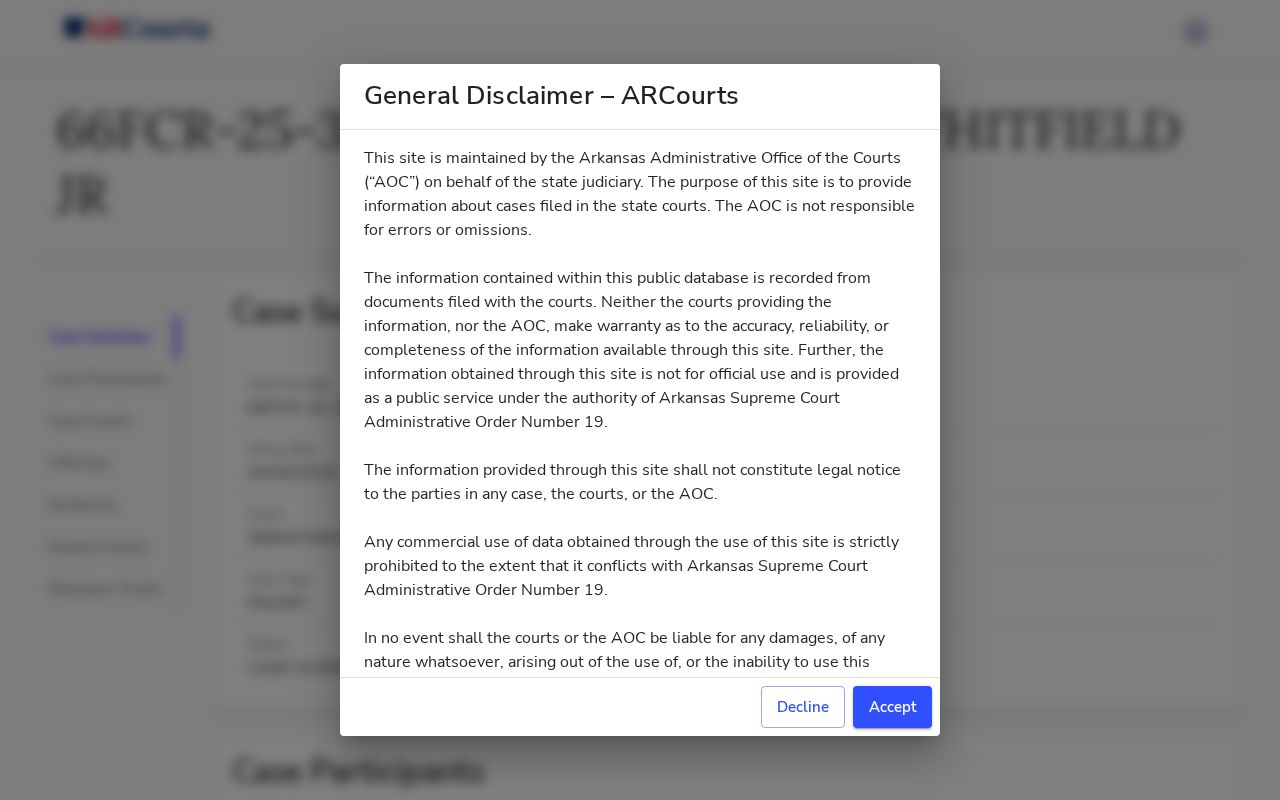
Matching the case header first keeps a searcher from reading a charge, setting, or court result onto the wrong Sebastian County case.
Sebastian County Criminal Docket Outcomes
A charge line records what was alleged and how the case entered the court. It is not a finding of guilt. What happened later appears in the disposition plus any judgment or sentencing entries. Bond is different. It covers release or security terms. It does not fix the final outcome on the Sebastian County criminal docket.
- Charge
- The allegation filed in court.
- Plea
- The defendant's formal response to the charge.
- Disposition
- The recorded outcome and date.
- Bond
- Release or security terms while the matter is pending.
Codes on a docket run brief. Open a linked entry when it is public, then read any later order. Ask the correct Sebastian County criminal clerk. Staff there can identify the record and say where a file is held, but they cannot interpret legal effect or give legal advice.
Stages on a Criminal Docket
A Sebastian County criminal docket builds entry by entry. The clerk adds each paper and each court event as it arrives. A charging instrument may come first. Then a warrant or summons, an appearance, arraignment, plea, pretrial settings, motions, and court orders may follow, with a trial or plea leading to disposition and sentencing. That is not always the end. Revocation or appeal entries can appear later. So a closed-looking sequence may still gain post-judgment activity.
Docket flow: Filing › Arraignment › Pretrial › Plea or Trial › Disposition › Sentencing
Keep upcoming events separate from past ones. A notice of setting only records that a hearing was scheduled; it does not prove the hearing happened. Motions deserve the same care. A motion asks for a ruling, so pair it with any later order before drawing a conclusion.
Sebastian County Booking Versus Docket
Jail records and court dockets answer different questions. The Sheriff's inmate inquiry covers booking, custody, and bond. The Sebastian County criminal docket is the court record of the charge, filings, hearings, plea, and disposition. Booking data is not the charging document. The Sebastian County Sheriff's official inquiry itself sends readers to the Circuit Clerk for the actual charge. That notice marks the boundary clearly.
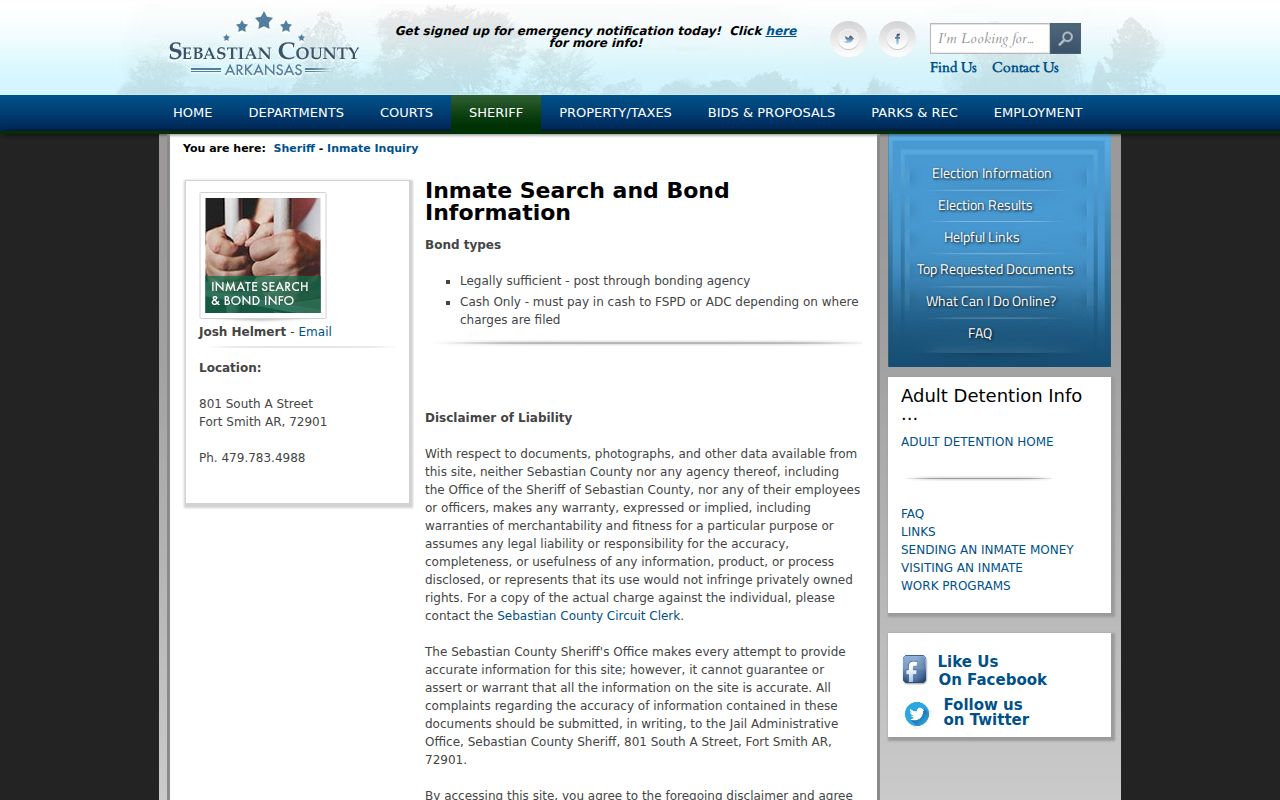
Use the jail channel for custody facts and the clerk's criminal docket for the filed case. If wording differs between the two, the court filing controls the judicial record.
Which Court Holds Criminal Dockets
Sebastian County Circuit Court holds the felony dockets. It serves both the Fort Smith and Greenwood judicial districts. Fort Smith District Court keeps the city's limited-jurisdiction criminal matters. Greenwood District Court keeps such records everywhere else in Sebastian County. Exceptions are Fort Smith, Barling, and Central City. Barling and Central City use their own courts.
| Court | Criminal docket role | Contact route |
|---|---|---|
| Circuit Court | Felonies and later circuit proceedings | Circuit Clerk criminal extensions 2955, 2958, or 2960 |
| Fort Smith District Court | Misdemeanors and violations in Fort Smith | Business office, 479-784-2420 |
| Greenwood District Court | County limited-jurisdiction matters within its coverage | District Clerk, 479-996-6501 |
Appeals and transfers can leave entries in two courts. Keep both numbers. Save the originating number and any new Circuit Court number, and for a name or number lookup, the Sebastian County case search explains the available fields.
Sebastian County Criminal Docket Resets
A reset only moves a setting; the old event usually stays in the case history. So read Search ARCourts activity from the top down. Start with the newest relevant entry, not the first one. A filed request to continue proves nothing by itself. The court grants it through an order. A new notice or a later event with a changed date can do the same. When two dates conflict, call the assigned division or District Court. Court Administration routes Circuit Court schedule questions at 479-783-1103. Fort Smith District Court uses 479-783-1103's counterpart, 479-784-2420, while Greenwood District Court uses 479-996-6501. A courthouse kiosk or posted docket works as another check close to the hearing date. Review same-day closure notices too. Note: The activity list may show both an old date and a reset. Confirm the current Sebastian County criminal setting with the assigned court.
Sebastian County Drug Court Dockets
The Sebastian County Adult Drug Court runs alongside an underlying criminal case and court supervision. It creates no separate public dossier. What the public can see still depends on the criminal case, Administrative Order 19, and any case-specific order. The county describes the program as a two-year alternative. It serves eligible nonviolent defendants whose substance-use problem contributed to the charge. The phase calendar keeps a Friday rhythm. Phase I meets every Friday. Phase II lands on the second and fourth Fridays. Phase III meets on third Fridays, Phase IV on first Fridays, and Phase V on fifth Fridays. Follow public docket activity through the underlying felony case number. The county also lists a Veterans Treatment Court. It offers no separate public search portal for that one.
Sebastian County Criminal Docket Payments
Where a payment goes depends on the court, just as criminal docket custody does. The county FAQ sends Fort Smith felony payments to the Prosecuting Attorney. That office is in Room 209 at 901 South B Street, and money order is the stated method. District Court misdemeanor payments go through the District Court business office. An officially linked payment channel also works. An online payment screen is not the Sebastian County criminal docket. It may show an amount and accept payment. It can still hide the charge history, settings, orders, and disposition. Check the court printed on the case or notice before sending funds. Payment can also carry conditions that do not clear a required appearance. So the assigned clerk remains the safe source for case-specific instructions.
Public Access and Sealed Criminal Dockets
Arkansas judicial rules chiefly govern public access in Sebastian County. Search ARCourts offers public case information, and clerk counters and kiosks supply other routes. Not all criminal content is open online, though. Sealed cases and juvenile matters may be withheld. Protected identifiers and material restricted by law or a court order may be withheld or redacted as well.
Key rules:
Administrative Order 19 governs access to court records and excludes protected information.
Ark. Code Ann. §16-90-1401 et seq. sets the criminal-record sealing framework.
Ark. Code Ann. §9-27-309 addresses juvenile record confidentiality.
The official Sebastian County sealing workflow sets out the local petition route and what the clerk requires to open or seal a record.
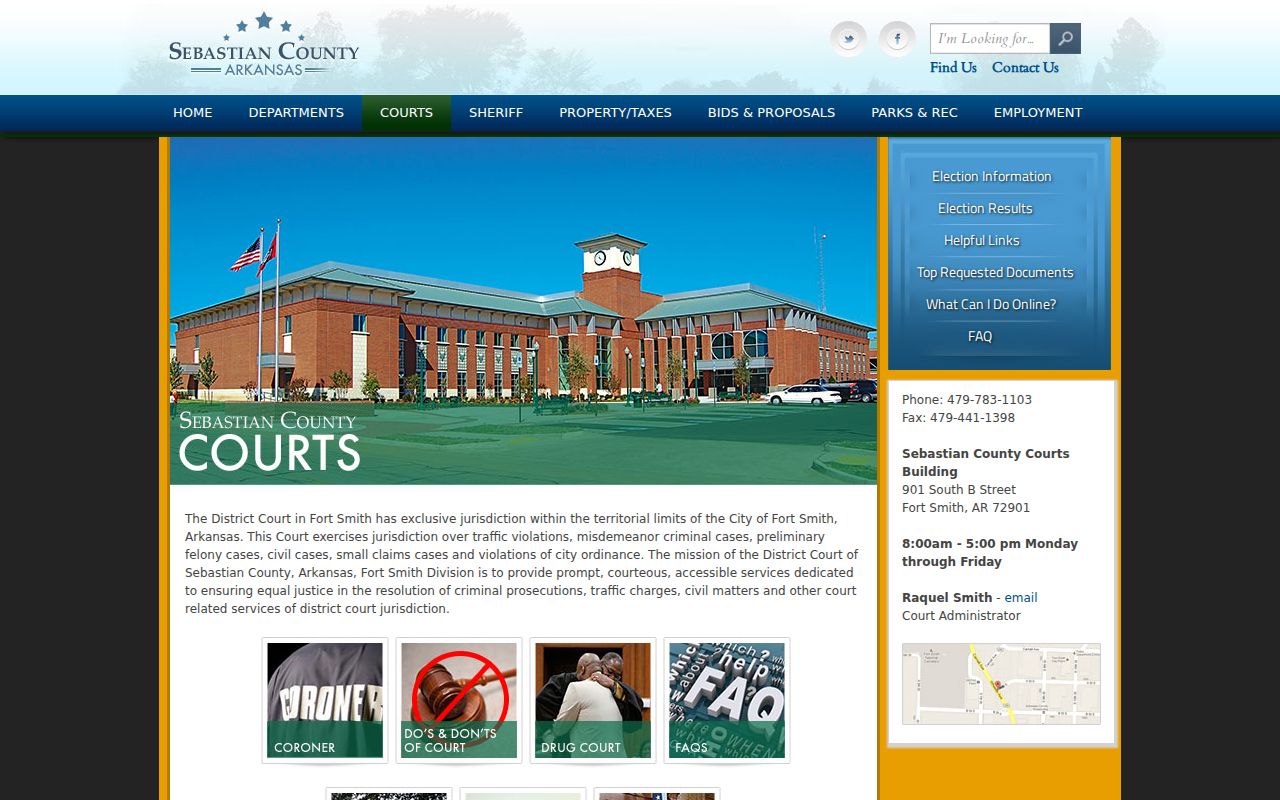
A case that drops out of view is not deleted or resolved. Access can change after sealing or another restriction, and lawful access runs through the court.
Sebastian County Docket Images
A public activity line can name a motion, notice, or order. The document image can stay closed to an anonymous user. Search ARCourts gives the case-information layer only. Sebastian County's separate imaging interface demands an iSeries username and password from the county. Its indexed terms are uppercase and case-sensitive.
When an image will not open, save the exact case number and activity date. Then call the criminal division, visit the correct Circuit Clerk counter, or use a courthouse kiosk. Ask whether a plain or certified copy exists and how payment or mailing works. Do that before sending a request. The clerk posts no universal turnaround or single copy charge for all Circuit criminal records. Confirm both for the specific file.
Confirm Sebastian County Criminal Dockets
Run a four-point match before trusting any result. Check the complete case number, case caption, court location, and filing date. Then read the activity through the disposition and any later sentencing, revocation, or appeal entry. A shared name alone never identifies the right Sebastian County criminal case.
For an official copy, contact the office that keeps that court's docket. Circuit felony records sit with the Sebastian County Circuit Clerk. Fort Smith and Greenwood District Court records belong to their separate clerks. Ask which counter holds the file. Check whether it is active or stored. Confirm that the document is public. That search, confirm, and certify sequence keeps the online index in its proper role.